The Gut–Ovary Axis: Why Your PCOS Treatment Should Actually Start in Your Stomach
Riya struggled for years with PCOS: irregular periods, unwanted hair, and weight gain. She tried every hormone pill and diet fad, but nothing stuck. Then her nutritionist suggested an unlikely fix — fiber-rich smoothies and probiotics, not just hormones. Over months, Riya found her cycles improving and her acne clearing. The secret? It turned out that in PCOS, the real battleground wasn’t just the ovaries, but the gut.
Yes, you read that right: your stomach may hold the key to better ovarian health. Emerging science shows a powerful “gut–ovary axis” linking what you eat and the bacteria in your intestines to your hormones and menstrual cycle. In women with PCOS, this axis can go haywire: unhealthy gut bacteria lead to inflammation and insulin resistance, which then fuel hormonal imbalances and excess androgen production. Let’s dive into this connection and discover how treating your gut can help tame PCOS symptoms.
The Gut–Ovary Connection in PCOS
Our digestive tract is home to trillions of microbes collectively known as the gut microbiome. These friendly bacteria help break down food, regulate immunity, and even influence hormone levels. In PCOS, researchers have consistently found gut dysbiosis — meaning a less diverse and imbalanced microbiome. For example, women with PCOS often have too few beneficial bacteria and more pro-inflammatory types like Bacteroides or Escherichia.
This imbalance can trigger a cascade of effects. The gut lining becomes “leaky,” allowing bacterial toxins (like lipopolysaccharide or LPS) to sneak into the bloodstream. These toxins ignite chronic, low-grade inflammation throughout the body. The ovaries sense this inflammation and respond by producing extra androgens (male hormones like testosterone). At the same time, insulin resistance worsens, and high insulin levels further stimulate the ovaries to make even more testosterone. In other words, a bad gut creates a vicious cycle: leaky gut → inflammation → insulin resistance → hormonal chaos.
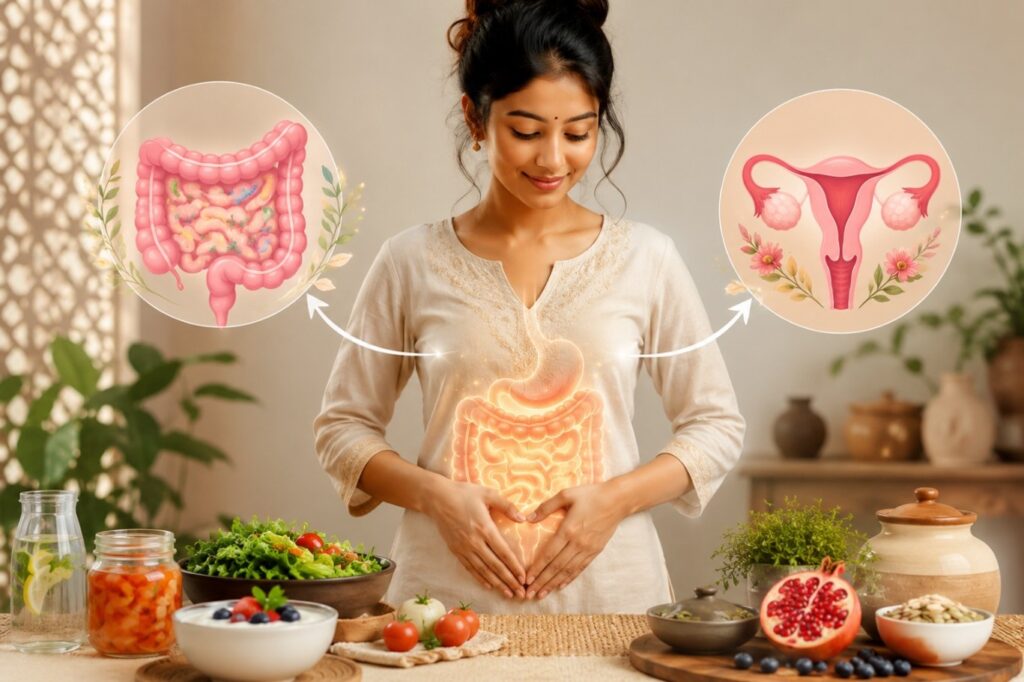
Figure: In PCOS, an imbalanced gut microbiome can lead to a “leaky gut” (intestinal permeability) and inflammation. Bacterial toxins entering the bloodstream can trigger excess insulin and androgen production by the ovaries.
Importantly, the gut doesn’t just send problems; it also normally produces short-chain fatty acids (SCFAs) like butyrate, which nourish the gut lining and curb inflammation. Healthy gut flora makes plenty of these SCFAs, which help maintain insulin sensitivity and protect the ovaries. But in PCOS, with dysbiosis, SCFA production often falls, removing that protective buffer. Thus, restoring a balanced gut can in theory reduce insulin spikes and hormone imbalance.
What Research Shows: Healing the Gut Helps PCOS
Scientists are now testing whether fixing the gut can improve PCOS. Early results are encouraging. In one study, women with PCOS were given a daily probiotic supplement (good bacteria) for a few months. These women saw lower insulin and testosterone levels and higher SHBG (a protein that binds androgens) compared to placebo. In simple terms, probiotics helped calm the metabolic storm and reduce “free” testosterone.
Other trials with prebiotics and synbiotics (food for microbes) show similar trends: improved blood sugar control, reduced weight, and smoother periods. Dietary studies are also promising. High-fiber diets (plenty of vegetables, fruits, whole grains, legumes) naturally feed good bacteria and promote SCFA production. In practice, women with PCOS who switch to a fiber-rich diet often report more regular cycles and less hirsutism. For example, a diet rich in beans, oats, and veggies can improve gut diversity and has been associated with lower androgen and insulin levels in PCOS studies.
Traditional therapies also hint at the gut’s role. Ayurvedic herbs like drumstick (moringa) and guduchi are used to reduce insulin and inflammation, and recent lab tests suggest they modulate gut flora. Even compounds like inositol (a supplement) work partly by improving gut health. Though more human data is needed, the common thread is clear: targeting the gut can break the hormonal loop.
How You Can Start: Diet & Lifestyle Tips
While science catches up, there are practical steps you can take to nurture your gut–ovary axis:
- Add Probiotics: Yogurt, kefir, fermented vegetables (like sauerkraut, kimchi), and probiotic supplements can boost beneficial bacteria. Aim for multiple servings daily.
- Load Up on Fiber: Eat lots of fibrous veggies (broccoli, spinach), fruits (berries, apples with skin), legumes (lentils, chickpeas), and whole grains (brown rice, oats). Fiber feeds gut microbes and promotes the production of gut-friendly SCFAs.
- Choose Anti-Inflammatory Foods: Colorful fruits and veggies, turmeric, omega-3 rich fish or flaxseeds, and nuts help reduce gut inflammation. Think of your plate as a palette — more colors, less processed junk.
- Limit Sugar & Refined Carbs: These foods can feed harmful bacteria and spike insulin. Instead of sugary cereals, opt for overnight oats with berries; skip the chips in favor of veggie sticks.
- Stay Active: Exercise has been shown to increase gut microbiota diversity. Even daily walks or yoga can help your gut health and insulin sensitivity.
These changes may sound familiar — they are just generally healthy habits — but they have been shown to specifically benefit women with PCOS by improving gut balance and metabolic markers.
Figure: Nourishing foods like fresh fruits, vegetables, fiber-rich grains, and fermented foods help build a healthy gut microbiome. A balanced diet rich in fiber and probiotics can improve insulin sensitivity and, by extension, hormone balance in PCOS.
Story: From Imbalance to Balance
Consider Priya’s story. She was diagnosed with PCOS after years of irregular menses. At her last clinic visit, Dr. Patil (a high-risk pregnancy and PCOS specialist at our Pune clinic) noticed Priya also had chronic stomach issues. The doctor suspected a gut connection. Dr. Patil suggested Priya try a dietary “tune-up” rather than immediately adding more hormones. Priya began drinking homemade buttermilk lassi with fennel (a traditional probiotic aid) and swapped her evening fries for a bowl of mixed vegetable curry and lentils.
Within months, Priya’s periods became more predictable, and her pregnancy tests turned positive when she had been struggling to conceive. She credits the gut-friendly diet for transforming her PCOS journey. “It’s like I treated the cause, not just the symptoms,” she says.
Integrating Gut Care into PCOS Treatment
It’s important to note: the gut–ovary link is an emerging field. We still need larger, long-term studies to define exact treatments. But the existing evidence is strong enough that leading endocrinologists are already advising patients to improve gut health as part of PCOS care. This means, for most women, the treatment plan may expand beyond Metformin and OCPs to include nutrition counseling and gut healing.
In fact, clinical guidelines now recommend lifestyle management as first-line therapy in PCOS. This can include referral to a dietitian for gut-friendly meal planning. At Dr. Patil’s clinic, our team often provides sample diets focusing on whole foods and prebiotic fibers. We also monitor how patients respond — often seeing improvements in androgen levels and ovulation frequency after a few months of gut-focused changes.
If you have PCOS and persistent symptoms, it may be worth mentioning digestive complaints to your doctor. Discussing the gut–ovary axis might lead to personalized tips. And remember, drinking plenty of water and chewing slowly also support gut function, which in turn can help your hormones.
Beyond Diet: Additional Gut-Boosters
Besides food, certain practices can enhance gut health in PCOS:
- Probiotic Supplements: Specific strains like Lactobacillus and Bifidobacterium have been tested in PCOS with good results. Discuss probiotic options with your physician.
- Prebiotic Foods: Garlic, onions, asparagus, and bananas contain inulin and other prebiotics that fuel good bacteria.
- Mind-Body Balance: Chronic stress can harm gut flora. Techniques like meditation, yoga, or simple breathing exercises help calm the gut–brain axis and reduce cortisol, indirectly supporting your gut.
- Avoid Unnecessary Antibiotics: Only use antibiotics when needed, as they can wipe out helpful bacteria. If you must take them, follow with probiotics to recover your microbiome.
Bottom line: Approaching PCOS holistically means thinking about your whole body — including the microbes in your gut. By nurturing the gut–ovary axis with dietary fiber, fermented foods, and probiotics, you can reduce inflammation and insulin resistance at the source.
In Riya and Priya’s words: “Treating my gut was like finding the missing piece of my PCOS puzzle.” If you’re ready to try this approach, start simple — add more vegetables and probiotic-rich foods. For more tailored advice, Dr. Patil’s clinic is here to help. Feel free to contact us to discuss how lifestyle and gut health support can be part of your PCOS care plan.
Recent Posts
-
 niPGT Demystified: The Non-Invasive Future of Genetic Testing Without Touching the Embryo
 -
 Beyond Human Eyes: How Dr. Shruti Patil Uses AI to Pick Your Best Embryo First.
 -
 “Skinny PCOS”: The Hidden Metabolic Crisis in Pune’s Lean Professional Women
 -
 The Gut–Ovary Axis: Why Your PCOS Treatment Should Actually Start in Your Stomach
 -
 A2 Ghee and Anti-Inflammation: Reclaiming Traditional Fats for Hormonal Healing