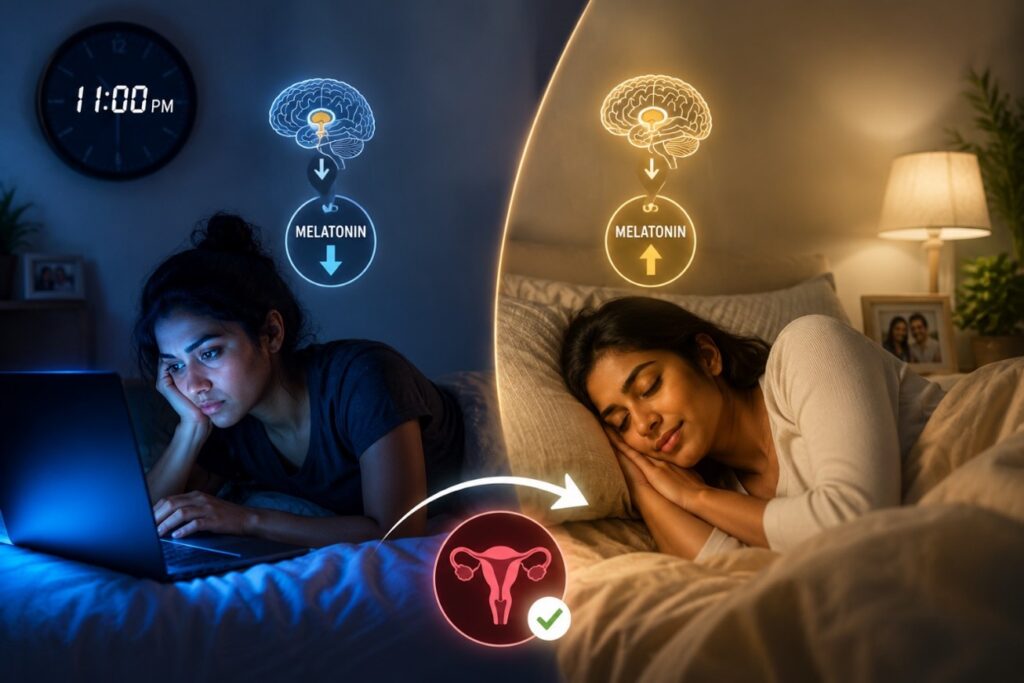
The Late-Night Laptop Glow: How Blue Light at 11 PM is Lowering Your Melatonin (and Your Fertility)
It’s 11 PM and you’re still tapping away on your laptop. The screen’s blue glow feels soothing in the dark, but unbeknownst to many, that light is hijacking your body’s natural sleep hormone and potentially harming your fertility. After decades of research, scientists now know that short-wavelength blue light strongly suppresses melatonin production. Melatonin is not just a sleep aid – it’s a master hormone that guides your circadian rhythm and even guards reproductive health. This blog digs into the science (and real-life stories) behind blue light, melatonin, and fertility, offering practical tips and expert insights along the way.
Figure: Late-night blue light from screens (like this laptop) hits your eyes and tricks your brain into thinking it’s still daytime. The result is low melatonin and disrupted sleep.
Blue Light at Night: Your Circadian Clock’s Enemy
Our brains evolved under a sky ruled by the sun and moon. The hypothalamus houses a tiny “master clock” (the SCN) that coordinates hormones, sleep, and body temperature around a 24-hour day. At dusk, darkness triggers your pineal gland to flood the blood with melatonin, the hormone of the night. Melatonin then signals every organ that it’s time to slow down and rest.
But modern life is full of artificial light. Phones, laptops, and LED bulbs all emit blue light – the same high-energy color as noontime sun. Specialized retinal cells (ipRGCs) detect even small amounts of blue light and shout “Stay awake!” to the brain. This suppresses the usual evening rise of melatonin, essentially tricking your body into thinking it’s still daytime. Studies confirm that even moderate blue light from LEDs or screens can cut melatonin production by 30–50% at night. Over time, this “light pollution” delays sleep onset, fragments sleep, and shifts your internal clock earlier – a recipe for chronic sleep loss.
For example, in a controlled lab study eight young adults were woken at 2–3 AM and exposed to increasing doses of pure blue LED light. Melatonin levels in the blood plummeted in proportion to the light intensity. In everyday terms, those hours of late-night screen time mean melatonin stays low when it should be rising, making it harder to fall asleep and set the stage for good fertility.
Melatonin – More Than a Sleep Hormone
Many think of melatonin as “the sleep hormone,” but it’s much more than that. It has powerful antioxidant and DNA-repair roles throughout the body. Deep sleep melatonin surges help trigger repair pathways in every cell. In functional medicine, melatonin is called a “master regulator” for hormones and immunity.
For women trying to conceive, melatonin is especially important. It cycles in tune with ovarian hormones. Normally, melatonin peaks during darkness and helps synchronize luteinizing hormone (LH) and progesterone pulses that regulate the menstrual cycle. But if melatonin is kept low by nightly screen light, these reproductive signals get scrambled. The result can be irregular cycles, delayed ovulation, or trouble coordinating egg release. In fact, a Taiwanese study of 16,000 women found those with diagnosed sleep disorders (and likely low melatonin) were nearly 4 times more likely to experience infertility than women with healthy sleep patterns.
Additionally, melatonin protects the developing egg (oocyte) and embryo from damage. As Dr. Shi Yan explains, “Melatonin acts as an antioxidant, scavenging free radicals and limiting oxidative stress,” which is crucial in the ovary’s follicular fluid. In a landmark IVF trial, infertile women with poor egg quality took 3 mg melatonin daily. Their follicles’ melatonin soared 4-fold, oxidative damage markers dropped significantly, and fertilization rates jumped from ~20% to 50%. Pregnancy rates also doubled compared to controls. These human studies show that melatonin isn’t just sleep-deepener; it is a fertility booster.
Figure: Melatonin levels rise in darkness and protect eggs (oocytes) with powerful antioxidant action. But late-night blue light (from screens or lamps) blocks melatonin’s rise, disrupting cycles and egg health.
How Blue Light Can Lower Your Fertility
Putting it all together: late-night blue light can indirectly sabotage fertility in several ways. First, less sleep and poor sleep quality are themselves linked to lower fertility. The Carrot fertility guide notes that when your sleep is erratic or late, “hormone signals fall out of sync and affect reproductive health,” from missing periods to lower sperm count. For women, poor sleep can reduce the rise of LH/FSH hormones needed for ovulation.
Second, suppressed melatonin means more oxidative stress on eggs and embryos. Human studies found that low nighttime melatonin correlates with poor ovarian reserve (low AMH) and antral follicle count. In other words, women with less melatonin in their follicles had fewer and lower-quality eggs. Conversely, boosting melatonin (naturally or by supplements) significantly improved egg maturation, fertilization, and pregnancy rates.
Third, melatonin affects pregnancy itself. It crosses the placenta and helps entrain the fetal clock. Low melatonin has been associated with complications like preeclampsia. Thus, chronically suppressed melatonin (from long-term blue light exposure) can raise risks at every stage – from conception to gestation.
In short, staring at glowing screens late at night can throw a wrench in the finely-tuned fertility machinery. It delays melatonin, shortens sleep, and increases oxidative stress on reproductive tissues. Even the sound of a buzzing phone or dim TV can mimic daylight to your brain. For someone trying to conceive, cutting into this “sleep hormone darkness” window repeatedly may mean extra cycles to pregnancy, or unexplained fertility struggles.
Protecting Your Melatonin (and Fertility)
The good news is that we can fight back with simple lifestyle changes. Here are expert-backed tips to keep melatonin on schedule and hormones happy:
- Set a “Screen Curfew”. Aim to power down laptops, phones and tablets at least 1-2 hours before bed. Treat this time as pre-sleep ritual: dim lights, unplug devices, and let your brain release melatonin naturally.
- Use Warm, Low Lights in the evening. If you must use lighting, favor warm amber bulbs or a bedside red lamp, and wear blue-blocking glasses after sunset. (Studies have found red light hardly suppresses melatonin.)
- Sleep Hygiene: Keep a consistent sleep schedule, even on weekends. Make your bedroom dark and cool. A high-quality mattress and blackout curtains can support restful sleep.
- Daytime Bright Light: Get sunlight in the morning. A strong blue-rich wake-up light (especially natural sun) helps anchor your circadian clock, making evening light less disruptive.
- Relaxation Rituals: Try gentle yoga, reading (on paper, not backlit devices!), or meditation before bed. These promote the parasympathetic “rest and digest” mode and can boost natural melatonin output.
- Consider Melatonin Supplements cautiously. For some fertility patients, doctors recommend a low-dose melatonin pill at night. Indeed, small trials have found benefits for IVF. Always consult your physician before starting any hormone supplement.
By following these steps, you can reclaim your natural night-time signal and give your fertility a better chance. In practice, couples who prioritize sleep and avoid late-night screens often report steadier cycles and more regular ovulation. Even if you scroll at work all day, turning off devices at 9 or 10 PM can make a huge difference to your hormone rhythm.
Figure: Many parents cherish the first ultrasound of their baby. Giving your body the rest it needs (and protecting melatonin) helps support fetal development. Melatonin passes to the fetus and even may guard placental health.
Putting It All Together – Expert Support
The science is clear: blue light at night lowers your melatonin, which in turn can delay sleep and disrupt reproductive hormones. For women planning pregnancy, this can mean irregular periods, lower egg quality, and harder-to-predict ovulation. Dr. Shruti Rothe Patil, a Pune-based obstetrician and infertility specialist, advises her patients on sleep hygiene as a key part of fertility care. If you’re trying to conceive, her clinic Dr. Patil’s Shree Orthopedic & Womencare recommends making the bedroom as tech-free as possible and discussing any sleep issues during consultations.
Visit the Best Gynecologist in Aundh, Pune
Your career is a marathon, not a sprint. Don’t let your 10-hour shift dictate your future family goals or your physical well-being.
At Dr. Shruti Rothe Patil’s Clinic, we specialize in managing the complexities of the modern woman’s health—from Normal Delivery Specialist care to managing Avascular Necrosis (AVN) or Shoulder Arthroscopy.
Contact Us Today:
- Name: Dr. Shruti Rothe Patil
- Location: Shop No 205, 2nd Floor, Gaikwad Villa, Seasons Rd, opposite Punjab National Bank, Sahil Park, Sanewadi, Aundh, Pune, Maharashtra 411007.
- Phone: +91 77985 97722
- Website: drshrutipatil.in
Your health is your greatest asset. Invest in it today.
Recent Posts
-
 niPGT Demystified: The Non-Invasive Future of Genetic Testing Without Touching the Embryo
 -
 Beyond Human Eyes: How Dr. Shruti Patil Uses AI to Pick Your Best Embryo First.
 -
 “Skinny PCOS”: The Hidden Metabolic Crisis in Pune’s Lean Professional Women
 -
 The Gut–Ovary Axis: Why Your PCOS Treatment Should Actually Start in Your Stomach
 -
 A2 Ghee and Anti-Inflammation: Reclaiming Traditional Fats for Hormonal Healing